|
|||
 |
|||
|
![[Image: Compass Rose]](/art/CompassRoseSmall.jpg)

|
|
|
|
Chapter 7 THE ELDERLY AND CHILDREN
The elderly can be looked at as a distinct subgroup of our population that has needs which often cut across lines of race and social class. Most elderly people in an industrial society face the problem of how to spend their time in a constructive, fulfilling way. When poverty and its accompanying lack of personal and neighborhood resources compound this crisis, life can become difficult indeed. In this chapter we will consider the aged population as a specific target group which should be taken into account in the planning of services. Further research is needed to identify the subgroups of this population whose needs are the most critical(1). The main purpose here is to detail the geographic distribution of the population over 60 years of age.
Almost one Cincinnatian in five is over 60. During the 70s, the elderly population declined at a dramatically slower rate (9 percent) than the overall population (15 percent). This trend toward an aging Cincinnati population reversed during the 1980s and the numbers for 1970 - 2000 show the city population declining by 26.9% and elderly population declining by 35 percent (Table 2d). The percentage of the population that is elderly declined from 42 to 35 in SES I and II, the two lower SES quartiles, between 1970 and 2000. In SES I only 15 percent of the population was over 60 in 2000. Sixty percent of the elderly lived in SES III and IV in 2000. Table 7a presents the percentage of seniors of the total population of each quartile. Comparing 1970 and 2000's percentages show that the most notable change is the increase in elderly percentage in SES III, the upper middle quartile.
Table 7a Trends in the Population Over 60 Years of Age
Table 7b Cincinnati Neighborhoods' Changes in the Senior Population, 1970-1990
Loneliness, isolation, poor health, improper nutrition and lack of meaningful work continue to relegate many older people to "high risk" status in our communities. Further research might reveal that certain sub-groups within the elderly population are not being effectively served by the new senior citizen programs. For example, elderly Appalachians tend not to utilize senior centers and health care facilities. Cultural influences of both the majority group and the Appalachian seniors tend to exclude the Appalachian elderly. The new Hispanic population is not expected to have many elderly people at this stage of the migration.
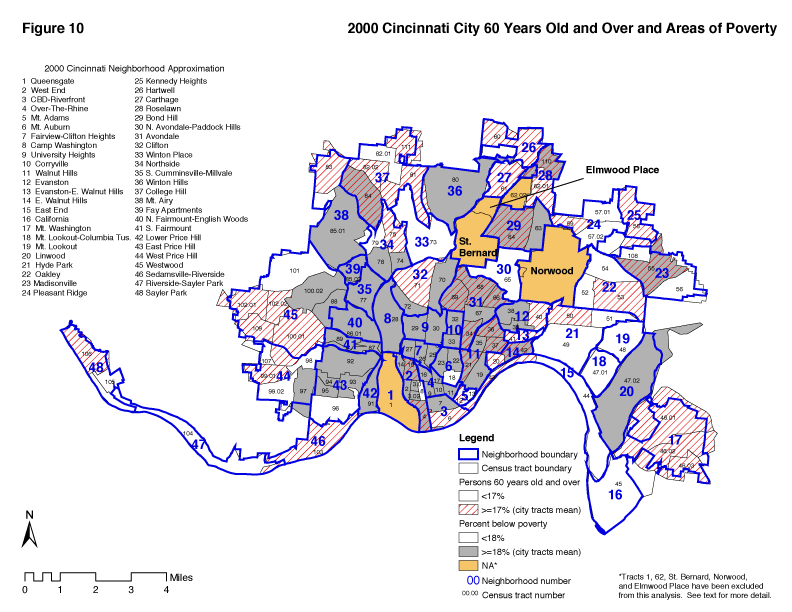
Figure 10 shows the distribution of high concentrations of elderly population as an overlay of poverty concentrations. This map shows that generally, the poorer areas do not have higher than average concentrations of senior citizens. The exceptions are in sections of the Walnut Hills in SES I, Sedamsville-Riverside, Evanston and Bond Hill in SES II. Possible explanations include: minority populations often are younger, mortality rates could be higher in the poverty areas and retirement may allow relocation to higher income areas. It is probable that as the life expectancy for Americans increases, health disparities and related higher mortality among lower SES groups will mean that by 2010 the age gap between lower and higher SES areas will be even greater.
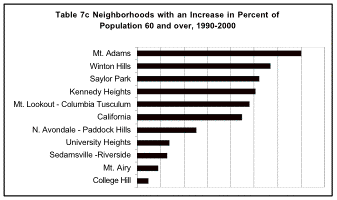
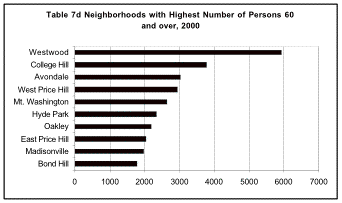
Table 7b shows trends by neighborhood. Most SES I neighborhoods showed a decrease in percent elderly over the past decade with Over - The - Rhine and Linwood experiencing the greatest decline. In SES II, most neighborhoods experienced a decline in percent elderly. The biggest losses were in Evanston and Winton Place. East Price Hill lost the most in terms of absolute numbers. Most neighborhoods in SES III and IV also experienced some decrease in the 1990s. Exceptions include University Heights, Sayler Park, Kennedy Heights, North Avondale-Paddock Hills, Mt. Lookout-Columbia Tusculum, California and Mt. Adams. Some of the statistics in Table 7c suggest dramatic neighborhood changes over the 30 year period. For example, in the Fairview area as the older German heritage population dies or retires, younger families take their place. The building of senior citizen housing complexes and nursing homes also affect these statistics. Neighborhoods with more than 20 percent elderly are: Hartwell, East Walnut Hills, College Hill, Sedamsville-Riverside, Bond Hill, Avondale, Kennedy Heights, and Roselawn. Most of these neighborhoods are in SES III and IV. Table 7c and 7d reveal the neighborhoods with the largest percentage increase in older persons and the largest number of older persons.
The trend toward an increasingly greater proportion of our population being elderly will continue at least in a metropolitan context. Community services must be innovative and comprehensive to meet the challenges of our aging population. The city as a whole needs to develop a greater sensitivity to the rights, needs, and resources of our older people in order to keep them as full members of our social networks. They have much to contribute and should not be perceived merely as one more "needy group".
The ChildrenChildren are worse off in the city of Cincinnati than in two thirds of the nation's 50 largest cities, according to a study by the Annie E. Casey Foundation. Cincinnati ranked in the bottom one third of the 50 cities on 8 out of 10 indicators of child well being. Cincinnati scored particularly poorly in its percentage of low birth weight babies, birth to teenagers, percentage of children in single parent families and numbers of children living in distressed neighborhoods. Using census data, the study found that in 1990, nearly one half of the Cincinnati children were growing up in single parent families. It also found that nearly one third of the city of Cincinnati's 91,352 children (under age 18) lived in neighborhoods with concentrations of poverty, female headed families, unemployment, and welfare dependency. Surrounded by despair and blight, children growing up in such communities are likely to be deprived of what they will need to become good parents, to hold a job, and to contribute to civic life, said Douglas W. Nelson, President of the foundation. Distressed neighborhoods "make poor outcomes for kids living there so predictable," he said (2).
Table 7e shows the age distribution of Cincinnati neighborhoods by SES quartiles. Using this data it is possible to observe patterns in the distribution of various age groupings. For example, the percentage of 6-17 year olds is higher in SES I neighborhoods than in other quartiles. Most SES I neighborhoods have more than 20 percent of their population in this age group. Most SES II areas have a percentage of 6-17 year olds in the 15-20 percent range. In SES III the range is from 3 to 17 percent with most neighborhoods in 14 to 17 percent range. In SES IV Mt.Adams and the Central Business District have very few children and the range of school-age children is 0 percent to 18 percent. From these data we can conclude a high need for services for children and youth in SES I and II areas.
In SES I, Fay Apartments stands out as having the highest percentage of children under 6 (28 percent). Winton Hills (21%), South Cumminsville-Millvale (17%), and Lower Price Hill (16%) have the highest percentages of children in the under 6 years old group.
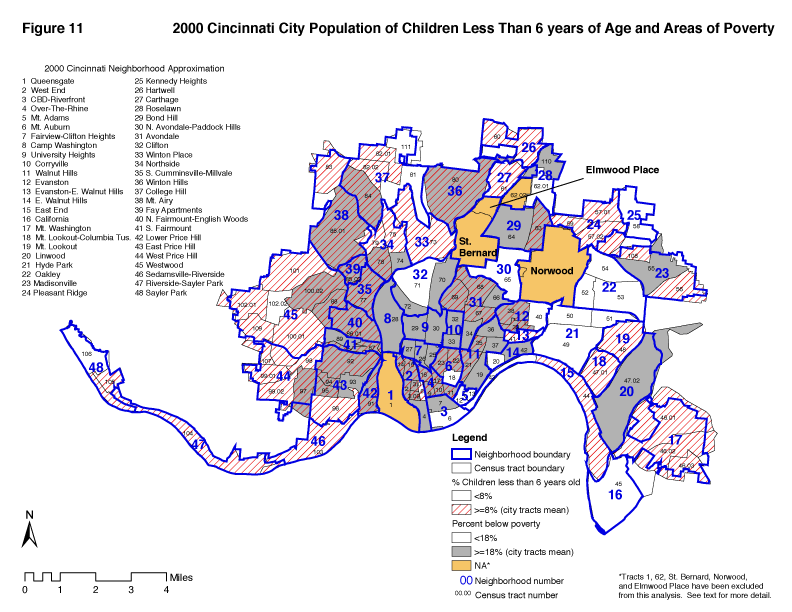
Figure 11 shows the census tracts which have both high rates of poverty and higher than average percentages of young children. These census tracts are located in Riverside-Sayler Park, East Price Hill, Lower Price Hill, South Fairmount, North Fairmount-English Woods, Fay Apartments, South Cumminsville-Millvale, Westwood, Northside, Winton Hills, Avondale, Evanston, Walnut Hills, and Over-the-Rhine.
For children 6 to 17 years old the following neighborhoods have over 20 percent of the populations within this age group: Winton Hills, South Cumminsville-Millvale, Lower Price Hill, North Fairmount-English Woods, Camp Washington, Fay Apartments, West End, and South Fairmount. This age group includes teenagers. High percentages of youth often means a neighborhood has a crime problem. These and other neighborhoods need special attention to provide healthy alternatives to teen crime and drug abuse.
In terms of sheer numbers the SES I neighborhoods with the highest youth populations are Westwood, Winton Hills, Avondale, Over-the-Rhine and West End. In SES II East Price Hill and Evanston have the highest percentage of youths (6 to 17) population. Mt. Airy, Winton Place, East End, Bond Hill, and Mt. Auburn are close behind. Percentages are one thing, raw numbers another. For example, if one wanted to target efforts based on high numbers of very young children there are seven neighborhoods which, in 2000, had over 1,000 children in the 1-5 age range. The highest number was in Westwood. Are there special needs in Westwood? The neighborhood description in chapter 10 shows Westwood to be a highly complex neighborhood which in some census tracts has experienced an influx of white Appalachians and African-Americans. A look at the Appendix III reveals that much of the decline in social indicators has occurred in tracts 88 and 100.02. Neighborhood leaders and planners should look further at what residents of these two tracts might be willing to help develop for their children and youth. Here we have used Westwood as an illustration of how to use the various components of this report as tools in needs assessment.
Community leaders in neighborhoods with large number of children and youths should ask themselves whether their neighborhoods are responsive or hostile to the needs of the various demographic groups. Are there playgrounds, daycare centers and other facilities for children? Are there schools where children feel safe, welcome, loved and challenged to learn?
Table 7e Cincinnati Neighborhoods Age Compositions, 2000
In 2000 there were 42,878 persons aged 17 and under in SES I and II, compared to about 29,192 in the two higher SES quartiles (table 7e). The fact that the youth population is so heavily concentrated in the lower SES quartiles suggests a need for high levels of investment in health centers, schools, and recreation facilities in inner city areas.
Table 7f and figure 11 can be used to help plan target areas for day care needs, youth recreation, and crime prevention initiatives. We have focused attention on SES I and SES II because children and youth in higher SES areas have more access to private day care, recreation, and health services.
|
|||||||||||||||||||||||||||||||||||||||||||||||||||||||||||||||||||||||||||||||||||||||||||||||||||||||||||||||||||||||||||||||||||||||||||||||||||||||||||||||||||||||||||||||||||||||||||||||||||||||||||||||||||||||||||||||||||||||||||||||||||||||||||||||||||||||||||||||||||||||||||||||||||||||||||||||||||||||||||||||||||||||||||||||||||||||||||||||||||||||||||||||||||||||||||||||||||||||||||||||||||||||||||||||||||||||||||||||||||||||||||||||||||||||||||||||||||||||||||||||||||||||||||||||||||||||||||||||||||||||||||||||||||||||||||||||||||||||||||||||||||||||||||||||||||||||||||||||||||||||||||||||||||||||||||||||||||||||||||||||||||||||||||||||||||||||||||||||||||||||||||||||||||||||||||||||||||||||||||||||||||||||||||||||||||||||||||||||||||||||||||||||||||||||||||||||||||||||||||||||||||||||||||||||||||||||||||||||||||||||||||||||||||||||||||||||||||||||||||||||||||||||||||||||||||||||||||||||||||||||||||||||||||||||||||||||||||||||||||||||||||||||||||||||||||||||||||||||||||||
|
|